The safe conduct of maritime operations depends on the correct use of access equipment and life-saving appliances. Among these, pilot ladders and lifeboats play a critical role in two high-risk scenarios: pilot boarding and disembarkation, and abandon-ship emergencies.
In accordance with SOLAS requirements and International Maritime Organization (IMO) regulations, proper installation, operation and maintenance of this equipment are essential to ensure safety of life at sea.
This article outlines the regulatory framework and operational procedures governing pilot ladders and lifeboats.
Pilot Ladders: Regulatory Requirements and Safe Operation
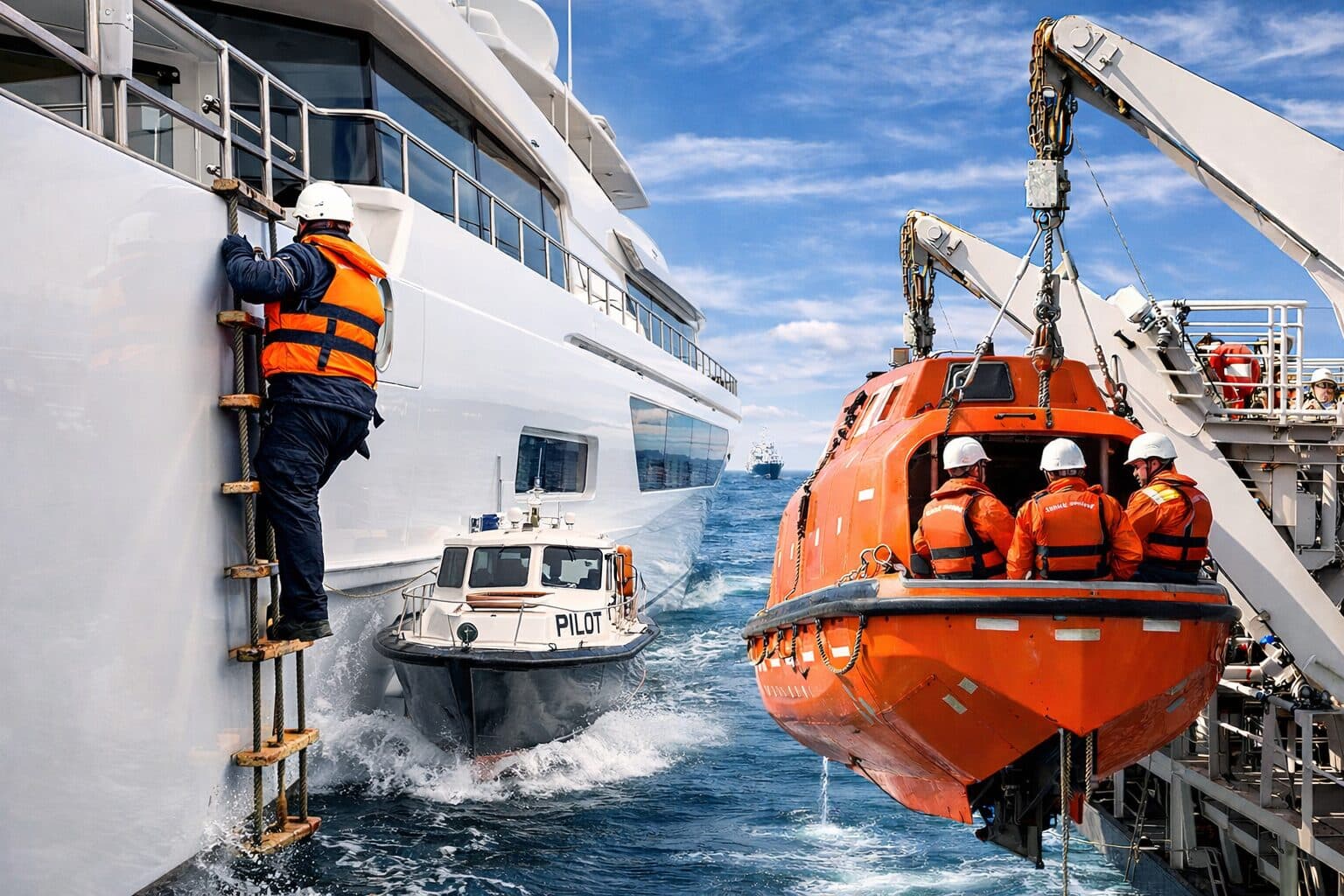
A pilot ladder is a flexible access device designed to allow a maritime pilot to safely board and disembark a vessel. It is a critical component of navigational safety, particularly during port approaches and maneuvers in restricted waters.
Under SOLAS Chapter V, Regulation 23, pilot ladders must:
-
Comply with applicable IMO standards
-
Be constructed from durable, slip-resistant materials
-
Have steps made of hardwood or equivalent material, free from knots and structural defects
-
Include spreader steps fitted at prescribed intervals
These requirements ensure structural integrity and safe access during boarding operations.
For safe pilot transfer operations, the ladder must be rigged correctly:
-
Secured only to certified structural strong points of the vessel
-
Never secured to handrails or non-load-bearing structures
-
Allowed to hang freely against the ship’s side without obstruction
-
Extended at least 2 meters above the water surface
-
Positioned in a properly illuminated area
Improper securing remains one of the primary causes of pilot transfer incidents.
Before and during use:
-
Conduct a visual inspection prior to deployment
-
Check for damaged steps or worn ropes
-
Ensure trained personnel supervise the operation
-
Maintain constant communication between bridge and master
Supervision and procedural discipline are essential during boarding and disembarkation.
Frequent operational errors include:
-
Improper combination with accommodation ladders
-
Temporary or incorrect securing methods
-
Lack of supervision during transfer operations
-
Use in extreme weather conditions without appropriate precautions
Such errors can significantly increase risk exposure.
Lifeboats: SOLAS Compliance and Emergency Procedures
Lifeboats are collective life-saving appliances designed to ensure the survival of crew and passengers during abandon-ship emergencies. They represent one of the primary safety systems required under international maritime regulations.
Under SOLAS Chapter III, lifeboats must:
-
Be capable of withstanding severe weather conditions
-
Provide sufficient capacity for the assigned number of persons
-
Be equipped with required survival equipment, including water, rations, distress signals and medical supplies
-
Undergo periodic inspections and launching drills
Compliance with these requirements ensures readiness in emergency scenarios.
Prior to launching during drills or real emergencies:
-
Verify proper condition of the launching system
-
Check engine functionality (for motorized lifeboats)
-
Ensure onboard survival equipment is complete and secured
-
Confirm watertight integrity in totally enclosed lifeboats
Pre-launch verification reduces the risk of mechanical or procedural failure.
During abandon-ship operations:
-
Follow instructions from the officer in charge
-
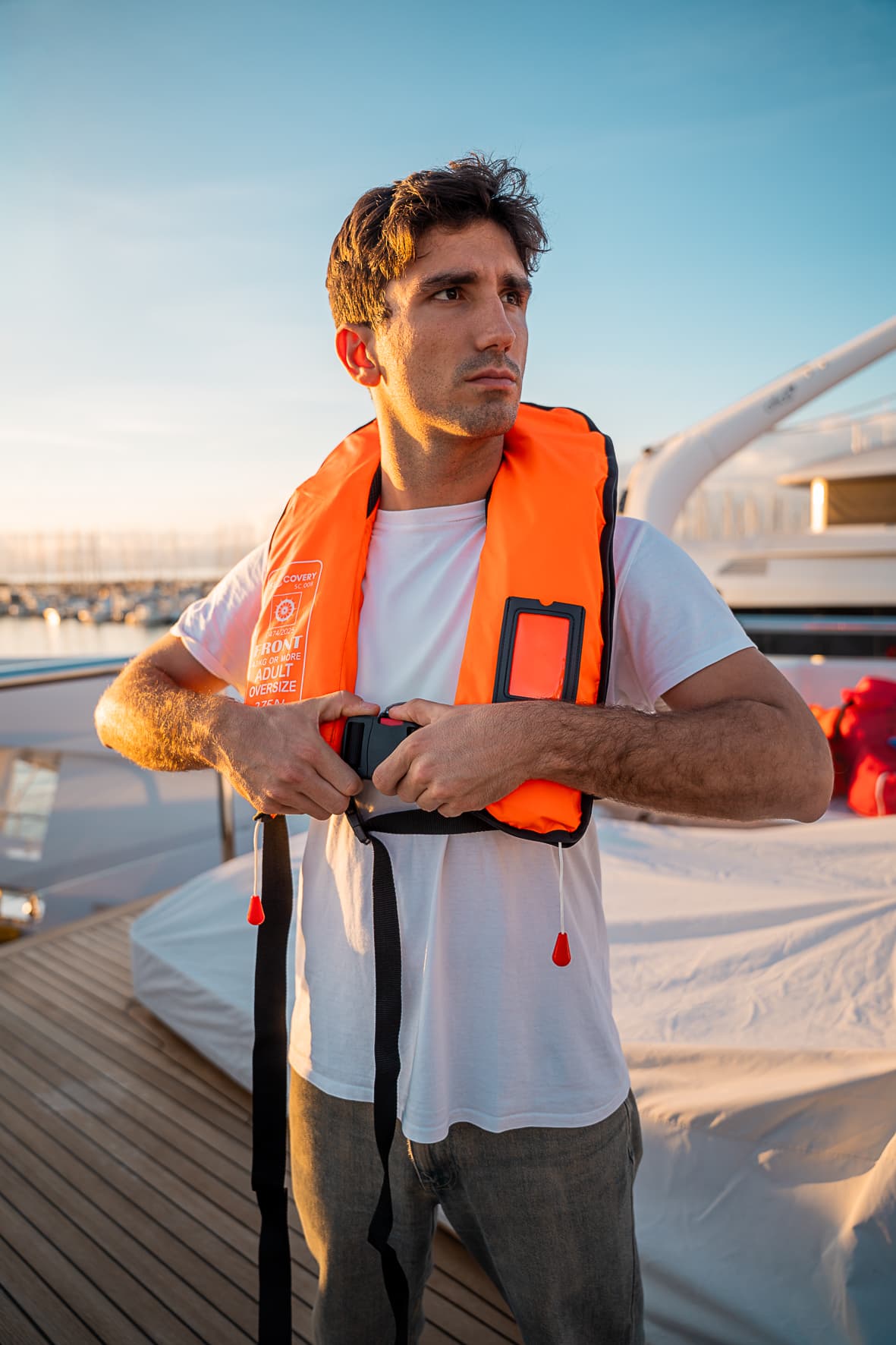
Properly wear a life jacket
-
Remain calm and distribute weight evenly
-
Avoid sudden movements during lowering
Controlled boarding minimizes instability and mechanical stress on davits and release systems.
When lowering the lifeboat:
-
Confirm winch brakes are operational
-
Lower in a controlled and steady manner
-
Release hooks only once the lifeboat is fully waterborne
-
Move clear of the vessel immediately after release
Adherence to correct release procedures is essential to prevent accidents during water entry.
Regular maintenance is mandatory to ensure operational readiness:
-
Weekly visual inspections
-
Monthly operational tests
-
Annual servicing by authorized technicians
-
Periodic testing of on-load release mechanisms
Documented inspection records support compliance and safety management systems.
Crew Training and Operational Readiness
The effectiveness of pilot ladders and lifeboats depends not only on regulatory compliance but also on crew competence.
Best practice includes:
-
Mandatory periodic drills
-
Familiarization with emergency procedures
-
Realistic but controlled simulation exercises
-
Continuous updates in line with IMO circulars
Structured training programs strengthen emergency preparedness and procedural consistency.
The proper use of pilot ladders and lifeboats is essential to prevent serious accidents and safeguard life at sea.
Compliance with SOLAS requirements, systematic maintenance and continuous crew training form the three fundamental pillars of operational safety.
Safety is not determined solely by equipment, but by the competence, discipline and responsibility with which it is managed and used.